ARTTYCO TALKS
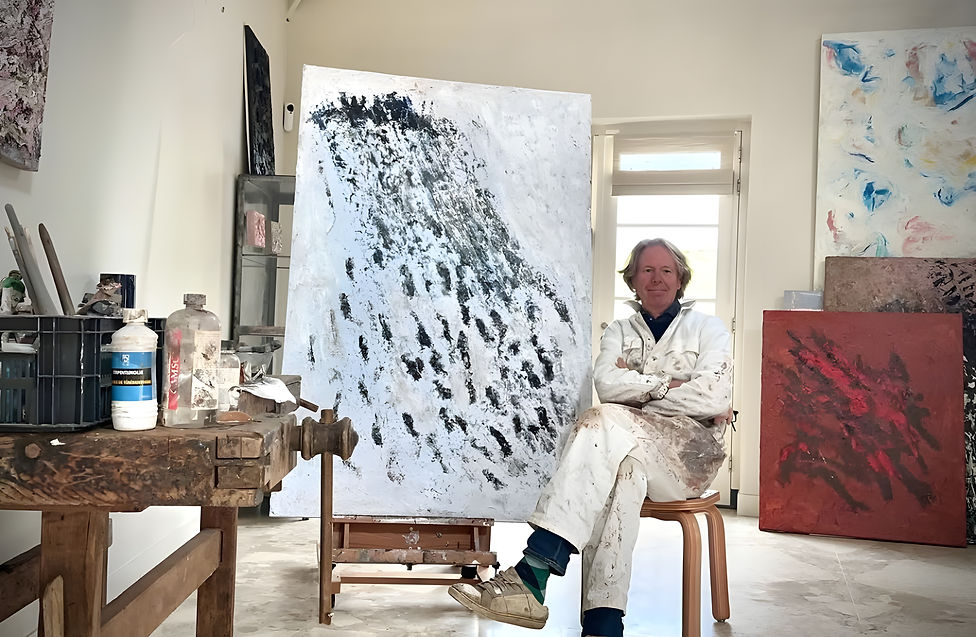
Leo invites us into quiet, post-human landscapes—where time has slowed, nature reclaims, and imagined futures unfold through layered textures and muted horizons.
ARTTYCO TALKS | 6 September, 2025.
EPISODE #11: LEO KLOOTWIJK
1. Your work envisions “dystopian, semi‑abstract landscapes” set in the near future, often barren of human presence. What do these imagined futures reveal about your relationship to humanity’s impermanence?
L: I am deeply worried about our interaction with our planet and between ourselves. I fear we are on a path that we cannot reverse. Lately I also see that the attention for our environment is diminishing, which exacerbates this fear. I believe as an artist you can certainly point to this and even small acts can make some difference. I feel the art world is very inward looking and focussed on impressions, styles and of course beauty. I believe you can actually make good art and at the same time convey a message.

2. You paint with oils and incorporate natural materials like grass, twigs, sand, and seaweed. How do these elements enhance your exploration of nature’s enduring power and the temporary role of humans?
L: These are artifacts of nature. They have had a life before I gathered them and by using them I give them a life beyond us. And by taking them out of their context I can give them a life in in the context of the atmosphere and message that I want to conve

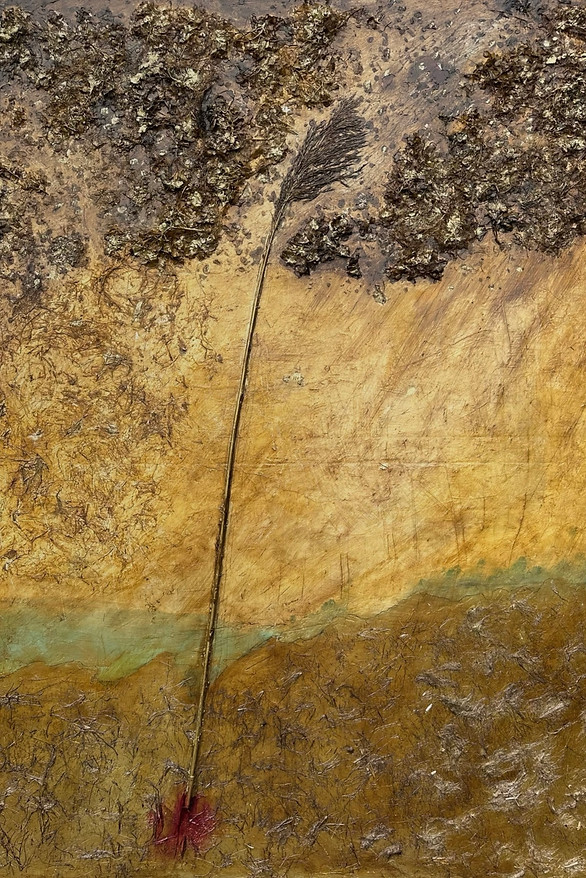
3. Your paintings are often titled with a future year (e.g. “Anno …”). How does situating a work in the future impact the viewer’s perception—and your own creative process?
L: I am hoping this helps in the process of envisaging a future where we might not be there. And by envisaging that, perhaps change something in the behavior and perception of the viewer

4. How has your experience traveling the world influenced the way you depict landscape—or the absence of humanity within them?
L: I have worked in businesses across the globe and have seen how corporate life works. And I can tell you: the survival of human kind is not at the top of their agenda’s. Many business live from quarterlies to quarterlies (figures) and the long term orientation is missing. Certainly businesses in the US work that way. This is something that’s very hard or perhaps impossible to change.


5. Your work suggests that nature ultimately reclaims what humanity leaves behind. Do you see your paintings as a warning, a meditation, or something else entirely
L: You can say that we are destroying our own house, but at the same time, if you take a more distant stance, we (as humans) could not have survived forever anyway. Earth has been in existence for 4,5 billion years. And will not last beyond another 5 billion years. We have been here only 300.000 years and could life another 1 billion years if we would have done it right. If we mess up earlier, who cares? My paintings can contribute a little something. But they contribute hugely to my well being, so that’s great. If others appreciate them I am already making some impact.