
ARTTYCO TALKS
Reiner Heidorn reflects on immersion, ecological awareness, and the meditative process behind his vast green worlds — inviting us to rediscover our place within nature’s fragile systems.
ARTTYCO TALKS | March 05, 2026.
EPISODE #25: REINER HEIDORN
1. Your work is deeply rooted in the materiality of nature, especially your unique use of chlorophyll. How did this medium enter your practice, and what does working with living pigment reveal to you about time, decay, and transformation?
R: I don´t use chlorophyll literally, but I researched microscope images of plant cells and chlorophyll. There is always a green structure, a whole universe of thousands of micro-sprenkles and dots - so this is the inspiration for my large scaled botanical motifs.
I developed an own technique with poured and sprenkeld oil colors in various densitiy of pigments, colour and turpentine, which allows me to create wished dots, that perforate the layers of colours or swims as visible dots on it.

2. Your paintings feel both monumental and intimate, expanses of green that pull the viewer inward. What draws you to immersion as a visual experience, and what kind of emotional or physical response do you hope to evoke?
R: During my process of developing a style, that at least convices me to be relevant contemporary artwork, I once felt the urge of disappearing from all the noise, trends, exploitation of the environment and daily stress - after I discovered the universe of the microscope images about plants and freshwater, I transferred this world on canvasses and found immediatly sort of psychological recovery, calmness.
So I repeated this style for many years. My experience is, that live-viewers of my paintings in any country and of any background are touched in the same way. I want the poeple to discover their own unimportance in the global community and feel as as the tiniest part of a complicated and fragile system.


3. Much of your practice reflects an ecological awareness, not through literal representation but through atmosphere and presence. How do you see your work participating in the broader conversation about nature, sustainability, and our relationship to the living world?
R: I worked on the botanical style paintings years before the upcoming of the discussions about climate change and environmental issues.
But I wanted my art to be understand as a statement against economical endless growth and consume. So the artworks began to fit in by themselves in the current political and social situations. Of course I am a supporter of the movement to protect against climate change.
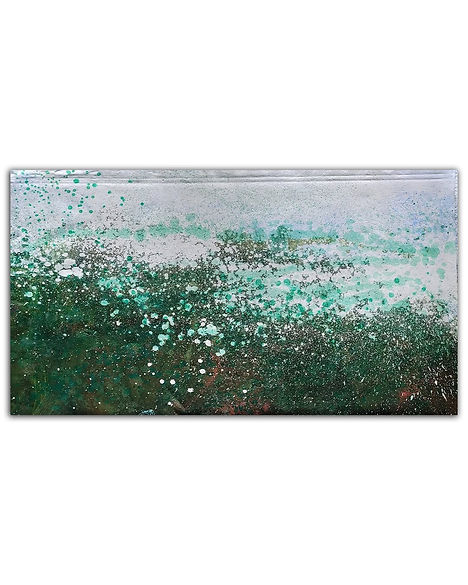
4. Your process often involves long, meditative application of thin layers, allowing the painting to unfold slowly over time. How does patience, repetition, and duration shape your understanding of painting as a practice.
R: All my paintings are made on the floor. I a first layer of a certain colour on the whole canvas and wait a few days, until it is a bit dry. After that I start with the first droplets, that should have an impact on the colors, than with the sprenkles, that should swim above the surface.


5. Viewers often describe entering your paintings rather than simply looking at them. What role does the viewer’s body, their breath, distance, and movement play in completing the experience of your work?
R: I must admit, during the process of a working on a new series I didn´t think of viewers or gallery trends at all. I don´t care about the useful appearance for living rooms. The only thing that matters is to achieve a good artwork, that is humble in harmony and strong enough to deliver the impression of an better universe.
After repeating the same painting over and over again for 12 years I now have certain securitiy in resolving formats to an outcome, that makes sense (for me).
But I do noticed, that a set up of my paintings in galleries are working exactly in the way, I wanted it to happen - people are stepping near in front, feeling sort of overwhelmed and touched in their child memories about the first encounters with lakes and fields.

