_JPG.jpg)
ARTTYCO TALKS
Monique invites us to reconsider the surface of things—where crushed forms, architectural gestures, and deliberate destruction become a language of tension, presence, and reinvention.
ARTTYCO TALKS | 27 August 2025
EPISODE #10: MONIQUE LACEY
1. Your sculptures range from wall-mounted pieces to more physically immersive forms. How does scale impact the viewer’s experience, and how do you decide when a piece should be dominant or intimate?
M: Scale plays into the performative absurdity and political weight embedded in the work. The larger forms can feel imposing—monolithic, even—which mirrors the bombast and theatrical dominance of the political figures they reference.
Smaller, more compressed works carry an intimacy and fragility that invite closer inspection, reflecting the quieter but no less potent emotional undercurrents of post-truth culture.
The decision to go large or small stems from the mood and intent behind the piece—sometimes we need the full spectacle, and other times, a whisper is more revealing than a shout.

2. What conceptual tension are you exploring between creation and destruction?
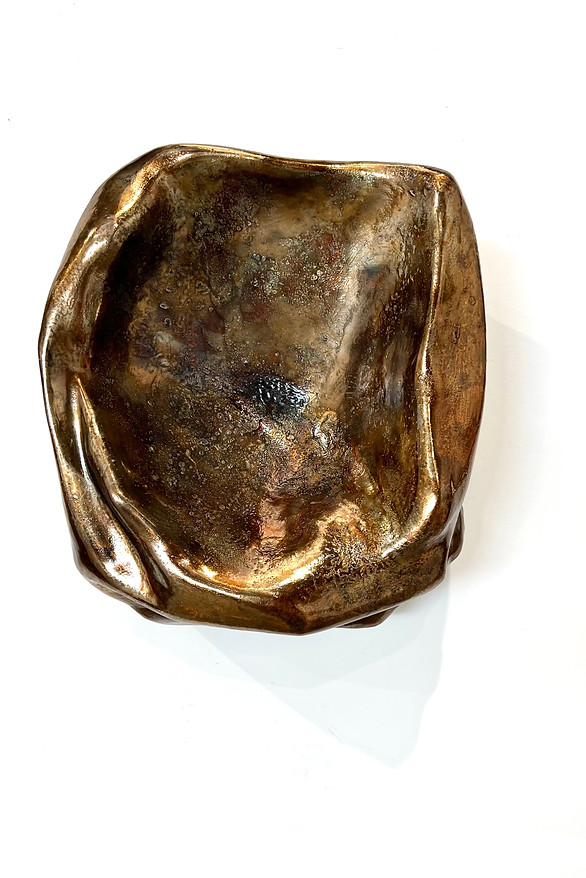
M: The tension between creation and destruction is central to the work, both materially and conceptually. I take mundane, throwaway materials—cardboard boxes, mostly—and destroy them with my body, pressing, crushing, sometimes lying on them or mimicking CPR. But that destruction becomes a point of transformation. In a post-truth world—where appearances often outweigh substance—I reconstruct the broken forms using seductive surfaces like chrome, pigment and wax.
These finishes mimic strength and stability, but they're ultimately superficial. The sculptures act as stand-ins for the kinds of narratives we see everywhere today: polished, persuasive, and hollow underneath. They don’t just reference collapse—they reflect how easily distortion can be dressed up as truth, how instability is repackaged as authority.

3. Do you see your body as part of the work itself, or more as a tool of transformation?
M: My body is absolutely part of the work. The process is both spontaneous and ritualistic—pressing, crushing, compressing with force or sometimes tenderness. It’s a personal response to collective absurdity. The body becomes a filter through which misinformation and political pantomime are processed. In that sense, the act of making is performative—my gestures record the contradictions, the push and pull between truth and spectacle. The finished object is a residue of that act.
%20_Overblown%E2%80%9D%20(floor)%20exhibition%20on%20now%20until%20the%204th%20of%20De.jpg)
4. Some of your works resemble architectural forms in ruin or collapse. Are you consciously engaging with themes of entropy, impermanence, or decay?
M: Not consciously in a formal or symbolic sense, but I do see entropy as a condition that aligns with the post-truth landscape. The crushed and distorted forms in my work aren’t designed to reference decay or collapse directly—they emerge as a result of physical processes: compressing, breaking, distorting. But that visual language of disintegration feels very much tied to our current cultural moment, where certainty is eroded and meaning is constantly shifting.
In that sense, entropy becomes a kind of backdrop—less a theme I’m illustrating, and more a state I’m responding to. The instability in the work mirrors the instability in the world around it, where nothing feels fixed, and everything can be repackaged or reframed.


5. Your works occupy space in unconventional ways—sometimes emerging from walls, other times commanding the floor. How do you think about placement and context when installing your sculptures, and how does that spatial dialogue influence their impact?
M: Placement is never incidental in my work—it’s fundamental to how the sculpture communicates and how it’s experienced. I think carefully about how each piece interacts with its environment, whether it’s emerging from a wall or occupying space on the floor. Wall-mounted works often function like interruptions—almost like headlines or soundbites cutting into a clean narrative. They can feel contained, but also intrusive, drawing attention to their presence in a more vertical, confrontational way.
Floor-based works, by contrast, take up space unapologetically. They assert themselves, inviting physical engagement or even obstruction—much like the inflated personas and media spectacles that dominate public discourse today. I'm interested in how these placements affect the viewer’s sense of stability, power, and presence. That spatial relationship—between the object, the body, and the architecture—echoes the way post-truth rhetoric infiltrates institutions we once saw as grounded or neutral. Ultimately, I want the sculptures to disrupt passive viewing and become part of a larger, unfolding conversation about perception and authority.


